

Interest calculations vary depending on account terms and the financial institution. For example, interest may accrue daily, monthly, or annually, with the Annual Percentage Yield (APY) representing the real rate of return, factoring in compounding interest. Understand the essentials of account balances, their calculation, and their impact on personal and business finances.
Ordinary Income
One of the main differences are the outstanding checks that have been recorded in the accounting system but haven’t been recorded by the bank. Checks that are outstanding for a long period of time are known as stale checks. In the U.S., outstanding checks are considered to be unclaimed property and the amounts must be turned over to the company’s respective state after several years. Outstanding expenses are liabilities because QuickBooks they suggest a responsibility that the company should pay in the future. Because these expenses have already been incurred but are not yet paid, the company has a responsibility to pay them in the next accounting period.
Accounting for an Outstanding Check
Encumbrance accounting helps them reduce maverick spending and improve spend management, minimizing leakage of cost savings. One way is to look for over-expenditures in reports generated after posting actuals and encumbrances. The other is to identify potential over-expenditures before they occur by verifying whether the budget has sufficient funds to cover the actual and hidden costs. Barbara is a financial writer for Tipalti and other successful B2B businesses, including SaaS and financial companies. She is a former CFO for fast-growing tech companies with Deloitte audit experience.

Outstanding Expenses – Debit or Credit?
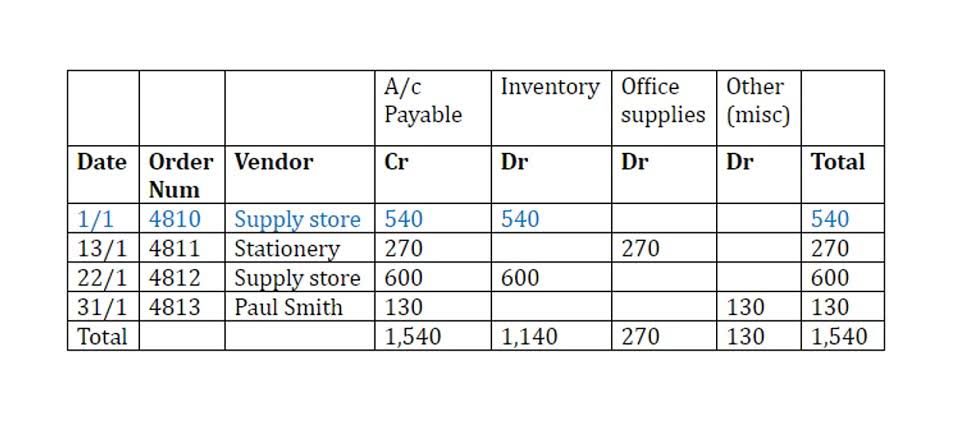
Outstanding Expenses are the expense which already incurs outstanding checks and past due for payment. It means the supplier already bills the invoice to the customer and it already past due for payment. Accrued Expenses are the expense which already incurs but the not yet due for payment. However, the term outstanding expense refers to an expense that has been incurred and is already past due. ‘Outstanding Expense’ account is credited to record the journal entry as shown in the article.
- In accounts receivable, an invoice sent to a customer remains open until payment is received and processed.
- Having too much idle inventory is detrimental to a company as inventory may eventually become obsolete and unsellable.
- EP (Equity partner) – A person or company that has invested capital in a partnership and is entitled to a share of the profits and losses of the partnership.
- COD (Cash on delivery) – A payment method used for online or mail transactions.
- It serves as the central repository for all accounts and balances, including assets, liabilities, equity, revenues and expenses.
Similarly, businesses that delay payments to suppliers risk damaging relationships and facing penalties. A business outstanding balance can be found in accounts receivable and accounts payable. Accounts receivable represent the money owed to a company by customers for products or services provided.
Businesses maintain records of issued invoices, payments received, and overdue amounts to determine the total outstanding balance. Similarly, the outstanding balance is the sum of all unpaid supplier invoices in accounts payable. These open transactions include unpaid invoices, pending payments, or ongoing contractual obligations that have yet to be settled. Tracking them is essential for maintaining accurate financial records and managing cash flow. They help businesses assess outstanding liabilities and receivables at any given time. Properly documenting open transactions is necessary for both internal management and external compliance.
In the second step, the items are unencumbered once they’ve been transferred to accounts payable. Then, the procuring company converts the encumbrance into an expenditure by transferring the transacted items from the encumbrance account into accounts payable. The procurement process begins with the intent to purchase goods or services. This intent implies that the business is highly likely to spend money in the future, which implies a commitment to make a purchase. Understanding the consequences of having outstanding checks can be significant for businesses in various ways. You can also call or write to remind the payee that the check is outstanding.

- In the U.S., outstanding checks are considered to be unclaimed property and the amounts must be turned over to the company’s respective state after several years.
- In the realm of business transactions, accounts receivable (AR) play a pivotal role in maintaining financial health.
- Companies are not legally required to give customers a grace period for receivables, but it is a common practice that can help maintain positive customer relationships and encourage timely payments.
- If they haven’t received payment, this may encourage them to deposit or cash the check.
- APA (Accounting principles applied) – A set of accounting standards for financial statements.
- With this knowledge, you’ll be able to analyze financial statements more effectively, assess a company’s performance, and make informed decisions.
It’s important to note that an outstanding check represents a liability for the payor until it is cashed or otherwise settled. To effectively manage your finances, you should be aware of how many outstanding Bookkeeping for Consultants checks you have and keep track of them to avoid potential overdrafts. In the next section, we will discuss the implications and risks of having outstanding checks in detail.
How to Improve DPO
DIS (Disclosure) – The process of providing information to stakeholders about a company’s financial position, performance, and prospects. CT (Capitalization table) – A table that shows the ownership of a company’s equity shares. CECL (Current expected credit loss) – A new accounting standard that requires banks to estimate the lifetime losses on all of their loans. BK (Abbreviation for bookkeeping) – Creating records for business transactions in a ledger.